A word from Professor Daniel Cohen
Le Master 2 Droit des affaires (Recherche) forme des juristes capables d’aborder des problématiques complexes du droit des affaires, tant sur le plan national qu’international. Les débouchés sont variées : carrières en cabinets d’avocats spécialisés, services juridiques d’entreprises, institutions financières, postes dans la recherche et l’enseignement. La sélection vise à réunir des étudiants de haut niveau et une forte motivation pour la recherche.
Mémoire de fin d’études : oui — chaque étudiant rédige un mémoire de recherche en fin de Master 2. Le mémoire a pour but de développer une problématique précise, de mobiliser une méthode de recherche juridique (doctrine, jurisprudence, droit comparé, analyse doctrinale) et d’apporter une contribution argumentée à un domaine du droit des affaires. Le sujet est libre ou choisi parmi ceux proposés par les professeurs du Master. Il doit se rattacher à au moins l’une des matières enseignées dans le diplôme.
Train high-calibre lawyers and prepare them for professional practice
Turn each student into an engineer of the law
Prepare candidates who wish to pursue a career in higher education
Core courses
Two lecture courses (2 × 25 h) and two compulsory methodology courses (2 × 50 h), covering:
- Company law
- Business operations
Faculty teaching the compulsory courses
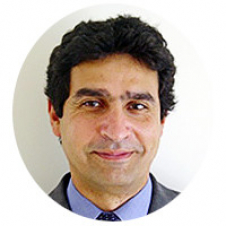
Professor Daniel Cohen
Company law
A holder of the French agrégation in law, Professor Daniel Cohen teaches business law at Université Paris-Panthéon-Assas, with a particular focus on company law, international trade law, arbitration and contract law as applied to business. He is a member of the French Committee on Private International Law and of the board of the French Arbitration Committee. He also heads the Master 2 in International Business Law.
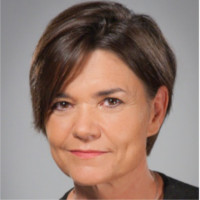
Professor France Drummond
Company law
A doctor of law and holder of the French agrégation in law, Professor France Drummond teaches commercial law and financial markets law at Université Paris-Panthéon-Assas. For many years she headed programmes in business law and taxation, and she has written extensively on financial law. She chaired Section 01 (Private Law and Criminal Sciences) of the French National Council of Universities and has sat on the Haut Comité Juridique de Place since 2015.
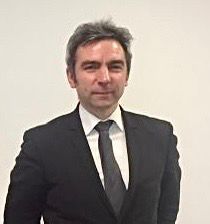
Professor Jean-Jacques Ansault
Business operations
A graduate of the École normale supérieure and holder of the French agrégation in private law and criminal sciences, he specialises in business law. Beyond the interplay between civil and commercial law, his work focuses mainly on company law, security interests and insolvency law, which he teaches at Université Paris-Panthéon-Assas. He has written a book on civil enforcement procedures and is an active participant in academic life (member of Cercle K2). He also co-heads programmes in contract engineering and economic civil law.

Professor Marie-Laure Coquelet
Business operations
A doctor of law and holder of the French agrégation in private law and criminal sciences, Professor Marie-Laure Coquelet has written numerous articles on company law, insolvency law and financial law. She is also the author and co-author of several books, including Droit financier, co-edited with Professors A. Couret and H. Le Nabasque, and Entreprises en difficulté – Instruments de paiement et de crédit, both published by Dalloz. She also co-heads several programmes.
Elective courses
- Law of financial transactions : France DRUMMOND
- International banking, financial and monetary law : Stéphane TORCK
- European business law : Marie-Hélène MONSÈRIÉ-BON
- Business tax law : Me Anne ROBERT (Bredin Prat)
- White-collar criminal law : Didier REBUT
- Competition and distribution law : Emmanuelle CLAUDEL
- Private company accounting : Matthieu DUBERTRET
- Insurance law : Laurent LEVENEUR
- Industrial property : Jean-Christophe GALLOUX / Jérôme PASSA
- Private international law : Sabine CORNELOUP
- Companies and international trade : Louis D’AVOUT
- Business law and employment relations : Julien ICARD
International dimension
The courses taught within the programme carry a strong international and European dimension: comparative law features prominently throughout, and the study of European directives is a major component of the training.
Conferences and seminars
These are complemented by lectures given by visiting foreign professors invited by Université Paris-Panthéon-Assas and by practitioners. Students are also invited to the conferences organised by the Business Law Research Institute (IRDA Paris).
Languages
Language course (optional, 37.5 h) — choose from:
- English
- German
- Spanish
- Italian
- Russian
Each year, no fewer than 10% of students come from foreign universities, adding a further international dimension to the classroom.
Setting and resources
In the heart of the Latin Quarter, facing the Panthéon and a short walk from the Luxembourg Gardens, Université Paris-Panthéon-Assas offers an exceptional study environment. Students have access to the faculty's specialist libraries, a union catalogue and an extensive network of electronic resources, as well as to the Cujas Inter-University Library.
Applications and selection
The Business Law (Research) track is open to holders of a French Licence in law or equivalent, with preference given to applicants who have studied the law of obligations and company law. Selection is demanding: over 1,400 applications for roughly 30 places. Professor Daniel Cohen makes the selection, choosing high-calibre and highly motivated candidates. Language skills and practical experience such as internships are valued.
Applicants must demonstrate solid knowledge of the subjects essential to legal reasoning in business law: the law of obligations, company law, specific contracts, property law and so on. During the first year of the Master's, they will deepen their knowledge of business law through courses in insolvency law, security interests, competition law, banking law and financial markets law. Particular attention is paid to how well previous training matches the content of the programme, and to whether the applicant has reached a level of knowledge commensurate with the depth of study offered. The quality of the training received and of the results obtained are therefore both taken into account.
Administrative conditions: authorisation to enrol is granted by the President of the University, on the proposal of the programme director, after review of the applicant's file.